GiggleTime GiggleTime
Menu
Go Premium Submit a Joke Comedians About FAQs Contact

Legal
Privacy Policy Terms of Service Cookie Policy Refund and Cancellation Policy Attributions
Login
Language
Categories
Settings
Language English
Safe Mode
Random Jokes Autoplay
Notifications
Global Talent Directory

Comedians Directory

Browse comedian profiles, biographical summaries, country of origin, and official links.

Add a comedian
1704 comedians
Guido Cantz, comedian from Germany
Verified Unclaimed
Germany

Guido Cantz

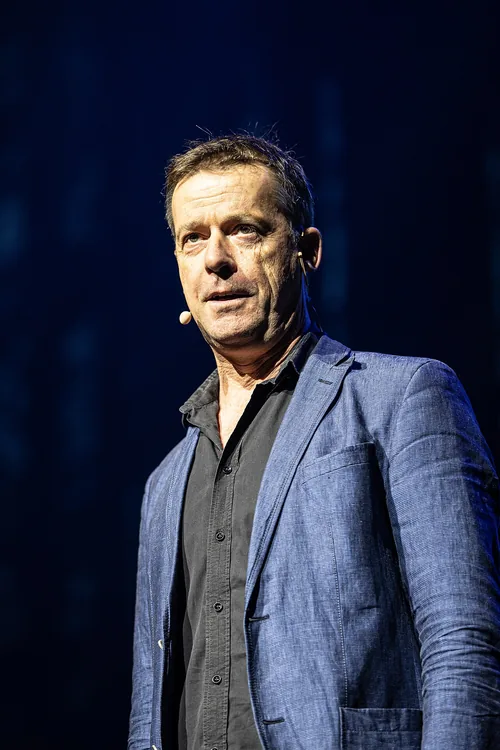
Guido Cantz, born on August 19, 1971, in Porz am Rhein, is a German television presenter and comedian. He attended the Maximilian-Kolbe-Gymnasium in Cologne-Wahn and earned his Abitur. Cantz began performing stand-up comedy at the Cologne Carnival in 1991, sometimes making up to 250 appearances per season. Between 1991 and 1994, he pursued a dual path: studying Business Administration at the University of Cologne while also undertaking an apprenticeship to become a state-certified commercial media assistant. This apprenticeship concluded in 1996 at the Joseph-DuMont Vocational College. He has worked for German broadcasters since 1998, appearing on comedy shows like Quatsch Comedy Club and TV Total, as well as other programs such as Ottis Schlachthof and Genial daneben. Additionally, his career in television has encompassed hosting game shows such as Deal or No Deal, along with diverse entertainment programs including Karnevalissimo, Kenn ich?, Die Edgar-Wallace-Show, and Wie geil ist das denn? Guido Cantz has been performing his individual stage shows throughout Germany consistently from 2006 onwards. He celebrated his 25th stage anniversary in 2017, dubbed "Blondiläum." His comedy style involves natural wit and targeted jokes, exploring topics such as climate change, artificial intelligence, and political correctness. He also incorporates personal family experiences into his performances and addresses challenges like midlife crises. In 2022, he won the second season of Der König der Kindsköpfe and hosted relaunched shows 7 Tage, 7 Köpfe and Ich setz auf Dich. He will host the relaunch of Glücksrad starting in 2024. As of 2024, he has been entertaining fans for 34 years and is considered one of Germany's most well-known comedians.

Günther Lüders, comedian from Germany
Verified Unclaimed
Germany

Günther Lüders

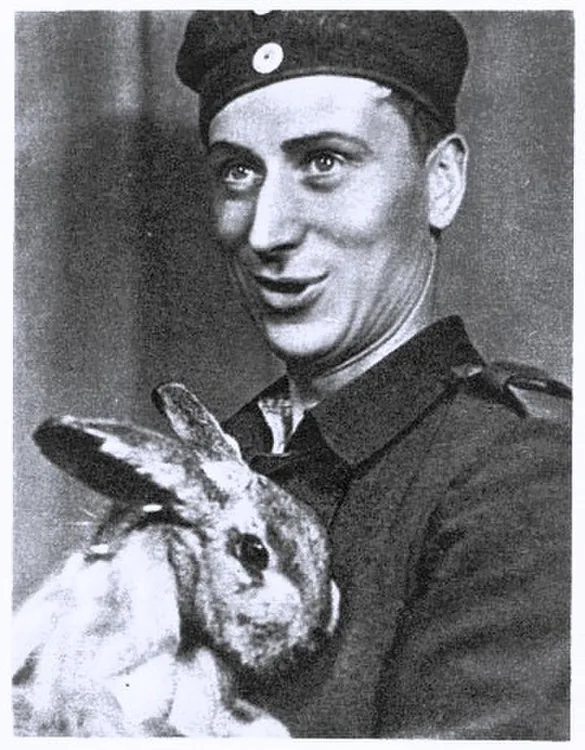
Günther Lüders, born March 5, 1905, in Lübeck, was a German actor with a career spanning over four decades. He came from a family involved in shipping; his grandfather, Johannes Meno Wilhelm Lüders, co-founded the Lüders & Stange shipping company in 1865, and his father, Carl, continued as a shipowner and merchant. After attending the Katharineum until reaching maturity and completing a commercial apprenticeship from 1921 to 1923, he pursued acting studies with Karl Heidmann. Early in his career, Lüders joined the Wanderbühne of the Städtebund-Theater in 1923, performing in cities like Lübeck, Dessau, and Frankfurt am Main throughout the 1920s. From 1934 onwards, he was engaged at Berlin theaters, and his film debut came that same year in Die Insel . His work included roles in notable films such as Drei Männer im Schnee (1951), Das sündige Dorf (1954), and Das Wirtshaus im Spessart (1958). He also ventured into directing, with films like Wenn wir alle Engel wären (1956) and Ihr 106. Geburtstag (1958). A brief imprisonment in the Esterwegen concentration camp in 1935 resulted from his critical views on the Nazi regime. Following World War II, Lüders continued to work extensively in theater, including engagements at theaters in Flensburg, Lübeck, and Hamburg. From 1947 to 1954, he was a prominent member of the Schauspielhaus Düsseldorf under Gustaf Gründgens. He was recognized as one of the most sought-after theater actors of his time. In addition to his stage and film work, he participated in over one hundred radio plays from 1946 onwards, often taking leading roles. Lüders also contributed texts for Die Rückblende in the 1960s and was known for his performances of works by poets such as Joachim Ringelnatz, Christian Morgenstern, and Wilhelm Busch. He resided in Urfeld am Walchensee from 1954 until his death on March 1, 1975, in Düsseldorf, shortly before his 70th birthday. His contributions to German entertainment were acknowledged with the German Kleinkunstpreis in 1974.

Hans Süper, comedian from Germany
Verified Unclaimed
Germany

Hans Süper

Hans Süper, a German musician and comedian, was born Johannes 'Hans' Süper junior on March 15, 1936, in Cologne. He passed away in Cologne on December 3, 2022, at the age of 86, due to liver cancer. His father, Hans Süper senior, was a member of the Kölner Gesangsquartet De Vier Botze, establishing an early connection to music within the family. Süper began his performing career around 1950 with his older brother Paul 'Charly' Süper as 'Zwei Schnürreme,' playing accordion. During this time, he met Hans Zimmermann, who would become his future partner in the Colonia Duett. From 1974 to 1990, Süper and Zimmermann formed the Colonia Duett, entertaining audiences primarily during Carnival. Their shows featured improvisational gags and Moritaten-like compositions centered around the phrase 'Du Ei,' which later became nationally known through television appearances on WDR, ARD, and ZDF. The duo reached a peak of 250-300 performances per year. After Zimmermann’s departure, Süper partnered with Werner Keppel from 1991 to 2002 as the Süper-Duett, continuing the same stage show style. The Süper-Duett officially celebrated its farewell in January 2002 at the Cologne Gürzenich. Süper increasingly used High German in his later performances, a contrast to his partner's dialect. He briefly retired from performing in 2004 but returned in 2011 and 2012 with the program 'Mein Leben mit der Flitsch.' This program, along with his autobiography of the same name published in March 2011 by Helmut Frangenberg, highlighted his connection to his trademark instrument, a mandolin crafted by his father during wartime imprisonment, nicknamed "Flitsch." He appeared at events such as the 'Coelner Giganten' in 2012 and the Cologne Dreigestirn proclamation in January 2013. In October 2016, he performed at 'Kölle singt' in the Lanxess Arena for approximately 12,000 spectators. He received the Dürener Papiermacherorden in February 2020 and was considered a Karnevalslegende (Carnival legend) from Cologne. A memorial is planned for Cologne-Sülz in 2024, and a puppet of Süper exists at the Hänneschen-Theater.

Heinz Gröning, comedian from Germany
Verified Unclaimed
Germany

Heinz Gröning

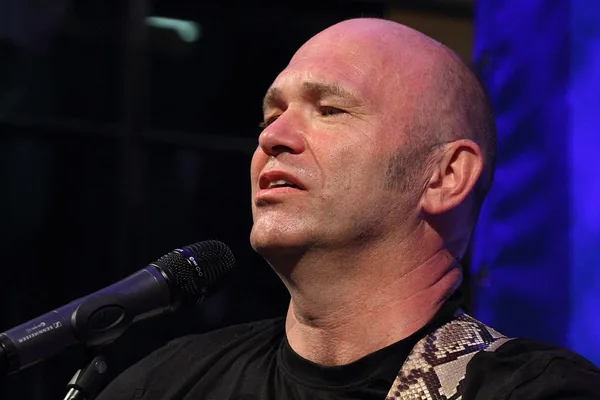
Heinz Gröning, born November 18, 1965, in Emmerich, is a German comedian, musician, and moderator. He is also known professionally as 'Der unglaubliche Heinz,' a stage persona inspired by The Incredible Hulk. Gröning's journey began with years of performing street theater and playing in various bands. Following military service, he pursued studies in medicine in Cologne and even completed an internship working as a doctor in pathology. This background informs his current work, which often incorporates medical references. Gröning gained wider recognition starting in 2007 as a regular guest on the show 'NightWash' on Comedy Central. His performances are characterized by singing and reciting self-written songs and poems, frequently using a Reclam booklet titled 'Ich bin ein sensibler Poet, gefangen im Körper eines zu stark behaarten LKW-Fahrers'. He often incorporates musical interludes, walking to his guitar with the announcement that women are present to witness this act. Throughout his career, he has released several CDs and hosted various television programs, including the first season of 'u. A. w. g. – um Antwort wird gebeten' on Comedy Central in early 2007, and 38 episodes of the comedy series 'Fun(k)haus' on WDR television from June 2007 to May 2010. He also presented ten episodes of the short ‘poetical comedy series’ Poetry Comedy on Sat.1 Comedy. Over three decades, Gröning has cultivated a distinctive comedic style that blends stand-up texts with play scenes featuring expressive mimicry and choreographed songs. His Christmas comedy program, "VERSCHOLLEN IM WEIHNACHTSSTOLLEN" (Lost in the Christmas Stollen), has become a tradition for many families, likened to having a Christmas tree. This show, which he has performed for 25 years, incorporates parodies of artists like Elvis Presley, Herbert Grönemeyer, Shirin David, and Rolf Zuckowski. Critics have praised it highly; the Rheinische Post called it the funniest Christmas comedy evening they had seen, while the Kölner Stadtanzeiger described it as very personal, very Christmassy, and incredibly humorous. With over 307 appearances, more than 40,000 audience members have attended his shows, generating over 50 million laughs in total. Gröning currently tours with programs like 'Dr. Laugh - BESTE MEDIZIN,' described as a humorous therapy, and continues to perform "Verschollen im Weihnachtsstollen." A new version of his show, "Heinz Punkt 25," is planned for 2025, featuring 25% of the best jokes from his career. He has received numerous awards including the Kleinkunstpreis Datteln, DER SPEZIALIST Hannover, and the Tuttlinger Krähe, and was nominated for a German Comedy Award.

Henning Schmidtke, comedian from Germany
Verified Unclaimed
Germany

Henning Schmidtke

Henning Schmidtke is a German comedian born on February 3, 1970, in Northeim. He spent his childhood in Hattorf am Harz and completed his secondary education at the Ernst-Moritz-Arndt-Gymnasium in Herzberg am Harz in 1989. Schmidtke pursued higher education, studying German and English in Göttingen. During this time, he engaged in musical activities, playing piano and forming bands, and also contributed written pieces as an author for the street magazine TagesSatz from 1997 to 2004. He toured Romania in 2002 with the chanson-rock band 'Schneemann', receiving funding from the German Foreign Office. Since 2004, Schmidtke has established himself as a cabaret artist, musician, and author. Initially performing under the name 'Kelvin von der Musikpolizei,' he gained recognition for his 'Musikpolizei' program, which featured reinterpretations of famous rock songs on piano. This program earned him the Bochumer Kleinkunstpreis in 2004. He has also written and composed material for other artists such as Hennes Bender and Ausbilder Schmidt. From 2001 to 2010, he provided musical accompaniment for improv theater groups. His work extends to radio comedy, collaborating with Ramona Schukraft on children's programs like the 'Jimmy Böndchen' series. Schmidtke’s current work focuses on presenting a generally optimistic view of the world. Beginning in 2011, Bastian Pastewka has hosted the interview podcast 'Schön Reden,' and his live performances feature programs like 'No Wumme, No Cry' (which aired on 3sat), 'Hetzkasper – zu blöd für Burnout,' 'Egoland,' and 'Es ist nicht alles so scheiße, wie du denkst.' He is also a victor of the Trierer Comedy Slam and has been featured on the Cologne program Nightwash. From January 2013 onwards, Bastian Pastewka has performed as a cabaret artist on ZDFinfo’s ‘Berlin Politix.’ His book, 'Es ist nicht alles so scheiße, wie du denkst,' came out in 2021, and the accompanying stage show – a blend of stand-up comedy and infotainment – is presently on tour. Schmidtke’s performances highlight positive developments often overlooked by the media, using statistics to support his argument that things are generally improving. He has recently won the Passauer Scharfrichterbeil in 2024, receiving praise for offering a perspective capable of spreading confidence and optimism, and also received the “Lorscher Abt” award in 2024.

Herbert Hisel, comedian from Germany
Verified Unclaimed
Germany

Herbert Hisel

Herbert Hisel, born on June 22, 1927, in Nuremberg, was a prominent Franconian humorist. He is considered the 'father' of Franconian humor and achieved significant success from the 1960s to the 1970s. Before pursuing comedy, he briefly worked as a bus driver after the war and then studied mechanical engineering. From 1953 until 1961, he was employed as a department head at Grundig AG. His comedic journey began in 1953 with amateur performances at company and Christmas parties, festivals, and beer tents. His first public appearance as a Büttenredner (table speaker) occurred that same year at the Karnevalsgesellschaft Rheinländer-Vereinigung in Nuremberg. He quickly gained recognition for his performances at the Nuremberg Volksfest and the Fürth Geismannsaal. In 1961, he left his position at Grundig to become a professional comedian, marking a significant shift in his career. His comedy style is described as dry, sometimes harsh, but heartfelt Franconian humor, frequently incorporating his signature phrase "Jou werkli." Hisel released his first single, 'Jahrgang 22,' in 1963, which became a hit and led to eight gold records for selling 50,000 singles each. Record covers were designed in the colors of the Franconian Rechen (a traditional calculation board). He appeared in fifteen films starting in 1967, including some sex comedies. From 1961 to 1966, he served as president of the 'Nürnberger Trichter Karnevalsgesellschaft e. V. 1909' and was Faschingsprinz 'Herbertla I.' in 1966. Due to significant tax debts of nearly one million marks, he fled to Canada in 1975, where he performed for German-speaking audiences. He died of a heart attack on September 21, 1982, near Toronto, Canada, following a car accident. A memorial stone was erected in Nuremberg in 2008, and a street, Herbert-Hisel-Weg, was named after him in 2016.

Ingo Insterburg, comedian from Germany
Verified Unclaimed
Germany

Ingo Insterburg

Ingo Insterburg, born Ingo Wetzker on April 6, 1934, in Insterburg, East Prussia (now Chernyakhovsk, Russia), was a German musician, comedian, and actor. He died on October 27, 2018, in Berlin due to complications from colon cancer, and is buried at the Waldfriedhof Dahlem. His family fled East Prussia during World War II in 1944 and eventually settled in Bernburg an der Saale, Saxony-Anhalt by 1946. He spent his childhood and youth in Bernburg. After earning his Abitur (high school diploma) in Bernburg, Ingo moved to West Berlin in 1953, retaking the exam because his DDR Abitur wasn't recognized. He studied art education at the Hochschule für Bildende Künste Berlin from 1954 to 1959. Early in his career, he accompanied actor Klaus Kinski as Guitar-Ingo and released an EP titled 'Guitar-Ingo' in 1959. He also shared a flat with Kinski in West Berlin. From the mid-1960s, he collaborated with Jürgen Barz, releasing the album 'Barocke Liebeslyrik' in 1968. In 1967, Ingo chose the name Insterburg as a reference to his birthplace and co-founded the comedy group 'Insterburg & Co.' which existed until 1979. Featuring Karl Dall, Jürgen Barz, and Peter Ehlebracht among its members, the collective gained recognition throughout the late 1960s and 1970s, developing a recognizable artistic approach termed “art of higher nonsense.” Their performances typically involved comedic songs, short scenes, and unique, self-constructed instruments, frequently featuring impromptu spoken comedy. A signature song was the endless-rhyme song 'Ich liebte ein Mädchen,' which chronicles unsuccessful romantic pursuits across various locations, and was sometimes adapted to include "Ich liebte ein Mädchen in Bernburch." The group appeared in films such as Quartett im Bett (1968), Charley's Uncle (1969) and Chapeau Claque (1973), and on television shows like Dalli Dalli and Musikladen . He toured with different ensembles under the 'Insterburg & Co.' name until 1993. After the group dissolved in 1979, Karl Dall pursued a solo career. Following the dissolution of 'Insterburg & Co.,' Ingo initially performed as a solo artist. He went on tour with Karl Dall in 2005 and later formed a duo called 'Insterburg & Black' with Lothar Lechleiter from 2011. Throughout his career, he appeared in four films and wrote several books, including 'Das Leben des Otto Darmstatt' (1973) and 'Die ersten 23456 Tage meines Lebens' (2001). He built many of his own instruments, including unusual creations made from kitchen appliances. Ingo Insterburg was a committed vegetarian and an honorary member of the Vegetarian Association Germany, and ran 21 marathons until he turned 70. Paul Koller, Bernburg’s cultural officer, remembers him as funny, kind, and uncomplicated.

Lisa Feller, comedian from Germany
Verified Unclaimed
Germany

Lisa Feller

Lisa Feller, born in Düsseldorf in 1976, is a German actress, comedian, podcaster, and former radio host. She currently resides in Münster. Her career began with studies in elementary education at the University of Münster, majoring in Catholic religion, and included time as a moderator for the university radio station Radio Q. Feller also gained experience as an improvisation actress, being a member of the Placebotheater ensemble, which achieved recognition by winning the Impro-Cup in 2004 and the Gloria Crown in 2005. Feller is known for her work in various comedy formats. She initially gained recognition through her role in the comedy series 'Schillerstraße,' appearing in season 5 in 2010, and also featured on the NightWash anniversary DVD in 2011. She has performed as a stand-up comedian in shows such as Quatsch Comedy Club, Nightwash, and RTL II Fun Club. Her live programs include 'Kill Bernd – aber vorher bringt er noch den Müll runter' (2010), 'Der Teufel trägt Pampers' (2012), 'Guter Sex ist teuer!' (2014), 'Der Nächste, bitte!' (2017), 'Ich komm’ jetzt öfter!' (2019), 'Dirty Talk' (2022), and the upcoming 'Schön für Dich!' (2025). She has also appeared on shows like "Mitternachtsspitzen," "SWR Spätschicht," "Genial daneben," and "Die besten Comedians Deutschlands." Beyond stand-up, Feller hosts the ARD cabaret show 'Ladies Night' since 2019 and co-hosted 'Das Tier in Dir' with Karsten Brensing in 2019. She has also ventured into podcasting, hosting 'Frau Feller & Frau Jahnke' (2020), 'Midlife-Party' with Jürgen Bangert (2021), and 'Naschkatzen' with Patricia Kain (2022). Her published works include 'Windeln haben kurze Beine' in 2013 and 'Mir geht’s gut, nur meine Brüste lassen sich hängen' in 2019. She demonstrated her knowledge and quick wit by winning the first season of 'Der unfassbar schlauste Mensch der Welt' in August 2022, earning the title "Unfassbar schlausten Menschen der Welt." Feller has received several awards including the Prix Pantheon nomination in 2012, the Bottroper FrechDax in 2017, and will receive the Recklinghäuser Hurz and the Ehrenpreis des Dattelner Kleinkunstpreises, Das Dattelner NachtSchnittchen in 2025. She also provides voice acting for projects like 'Die Gerd-Show' and various Hörspiele.

Otto Reutter, comedian from Germany
Verified Unclaimed
Germany

Otto Reutter

Otto Reutter, born Friedrich Otto August Pfützenreuter on April 24, 1870, in Gardelegen, Altmark, Kingdom of Prussia, was a German comedian, coupletist, and singer. He came from a poor Catholic family with roots in the Eichsfeld and the Altmark, and his father, Andreas Pfützenreuter, was a traveling salesman and military veteran. After attending elementary school and completing an apprenticeship as a merchant assistant from 1884 to 1887, he received training as a salesman's assistant. He achieved a breakthrough year in 1896 and gained fame after appearing at the Wintergarten Variety in Berlin. He was considered one of Germany’s leading stage artists for subsequent decades. His comedy style involved original, amusing lyrics delivered in a singsong style with irony and wit. Reutter composed over a thousand couplets, which are amusing cabaret songs; around 400 are documented. He also appeared in two short films, 'Otto heiratet' and 'Otto als Dienstmann,' in 1912, and acted as a statistic in other films. Reutter’s work reflected societal changes and provided comfort during difficult times. Starting around 1915, he performed ‘Kriegsrevuen’ at the Palasttheater am Zoo in Berlin, and from late 1916, his songs began to critically reflect on events and public opinion. He wrote a melancholic song 'Ich möcht’ erwachen beim Sonnenschein' about the post-war mood. The loss of his son, Otto Reutter Jr., at the Battle of Verdun in May 1916 also influenced his later work. In the 1920s, he primarily performed his couplets at the Wintergarten. He intended to retire as a millionaire in 1919 after a thirty-year career but lost much of his fortune due to inflation. Reutter died on March 3, 1931, during a guest appearance in Düsseldorf, due to a heart attack and was buried in Gardelegen on March 7, 1931.

Verified Unclaimed
Germany

Toni Impekoven

Toni Impekoven, a German actor and writer, made his name as a well‑known playwright, teaming up with Hans Reimann to create the popular comedy The Scoundrel, which was later filmed on two separate occasions. He was Sabine Impekoven’s brother and married Frieda Impekoven, and together they had a daughter, Niddy Impekoven.

Uli Boettcher, comedian from Germany
Verified Unclaimed
Germany

Uli Boettcher

Uli Boettcher is a German comedian and actor, born in Weingarten, Württemberg on October 16, 1966. He attended the Spohn-Gymnasium Ravensburg until 1982 and subsequently completed an apprenticeship as a painter from 1983 to 1986. Before establishing himself as a cabaret artist, Boettcher gained experience working as a comic artist, participating in street theater, and collaborating with free theater groups. His early career included a performance in Ingrid Lausund's play 'Krähenoper' at the Roxy cultural center in Ulm in 1991. From 1992 to 2009, Boettcher was an ensemble member at the Theater Ravensburg, where he frequently presented his solo programs and toured Germany, Austria, and Switzerland. One of his most successful solo programs, 'Romeo und Julia,' ran from 1991 to 2011 and incorporated improvisation. He also took on roles in classic works by Shakespeare, Lessing, Schiller, and Hofmannsthal at the Klosterfestspiele Weingarten beginning in 2000. In 2003, he co-founded the Improvisation Theater Improshnikov, which performs regularly at the Linse cultural center in Weingarten. Boettcher's career has included collaborations with Brian Lausund on shows like 'Wir können Alles' and 'Die Auswanderer,' and with Bernd Kohlhepp on productions such as 'Der unsichtbare Hund,' 'Winnetou IV – Prärie Comedy,’ 'Tonspurpiraten,' and ‘Denn sie wissen (noch) nicht, was sie tun.’ He has appeared in the TV series 'Tatort' in 2005 and 2012. His work has been recognized with awards including the Audience Award at the Wandertheaterfestival Radebeul in 2005, the Baden-Württemberg Kleinkunstpreis in 2013, and the Culture Prize of the cities of Ravensburg and Weingarten in 2015. He opened the Hoftheater, a small venue, in Baienfurt in March 2011.