


Verified
Unclaimed
Mexico
Carlos Ballarta
Carlos Sinuhe Martínez Vallarta, known on stage as Carlos Ballarta, works as a Mexican comedian and actor, characterized by his style of black humor.
Carlos Sinuhe Martínez Vallarta, known on stage as Carlos Ballarta, works as a Mexican comedian and actor, characterized by his style of black humor.

Eulalio González Ramírez, better known as El Piporro, served as an actor, humorist and Mexican singer. In his work as an interpreter, he focused on northern music.

Francisco Agustín Rosales Hevia, who calls himself Fran Hevia, works as a stand-up humorist and also acts as a director, writer, producer and journalist. It also responds to the nickname "The Wolf of Fud."

Juan Pablo Martínez-Zurita Arellano, known professionally as Juanpa Zurita, was born on March 29, 1996, in Mexico City, Mexico. His parents are Fernando Martínez-Zurita Reed and Teresa Arellano, and he has three siblings: Fernando, Andrés, and Paola Zurita. Due to his father's role as a political counselor within the Mexican Embassy, his family resided in the United States for some time. Currently, Juanpa Zurita lives in Los Angeles. Zurita’s rise to prominence began in 2013 when he started creating comedy videos on Vine. His initial video, posted on June 11, 2013, featured his dog and quickly gained significant attention. By the time Vine ceased operations in 2017, he had amassed over 1.8 million followers. He diversified his content to include vlogs and other entertainment videos on YouTube, where his channel currently has over 10.5 million subscribers. In 2016, he began modeling for prestigious brands such as Pull&Bear, Louis Vuitton, Dolce & Gabbana, and Calvin Klein. He also published a book titled 'El estúpido libro' that same year. Juanpa Zurita’s work extends beyond comedy and modeling. In 2015, MTV Latin America recognized him as ‘Icon of the Year,’ and he co-hosted the MTV Millennial Awards in 2017 with Lele Pons. Beginning in 2018, he has undertaken acting roles, such as portraying Alex Basteri, Luis Miguel’s brother, within the Luis Miguel television series; additionally, short films and series have featured him. He also served as a judge on Pequeños Gigantes in 2020 and hosted the second season of Nickelodeon's The Substitute. Demonstrating a commitment to humanitarian causes, Zurita has been involved in campaigns since 2013; notably, he raised 25 million Mexican pesos in September 2017 for earthquake victims and over $2 million in 2017 through Love Army For Somalia. He received an award in the 'international' category at the Streamy Awards in September 2018, and was included on Forbes’ 30 Under 30 list in 2017. In May 2021, he launched his own bottled water brand, Water People, and released a YouTube Originals documentary called ‘Aislados: Un Documental en Cuarentena’ in June 2020.
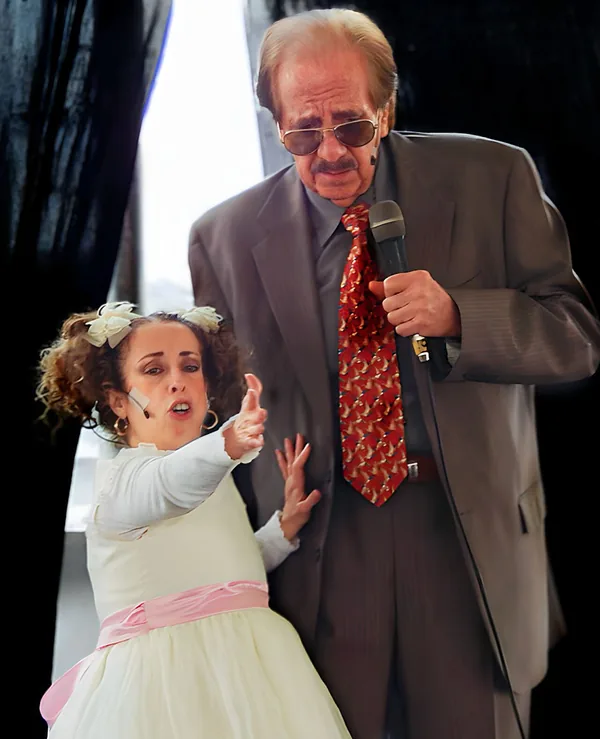
María Elena Saldaña, conocida artísticamente como La Güereja, es una actriz de televisión mexicana cuya trayectoria comenzó a mediados de los años 80. A causa de una enfermedad cuya causa no se ha identificado, padece enanismo. A lo largo de los años se ha destacado por encarnar a la niña mexicana Mariquita Castro Pérez, a quien se le conoce con el sobrenombre de “La Güereja”.

Lupe Rivas Cacho, born Guadalupe Rivas Cacho in Mexico City on August 8, 1884, was a multifaceted Mexican performer. She worked as an actress, comedian, and vedette, beginning her artistic career in 1897 when she was just thirteen years old. Initially, she performed in zarzuelas and operettas, appearing in cities like Mexico City, Guadalajara, Monterrey, and Mérida. Around 1910, she adopted the name Lupe Rivas Cacho and transitioned to theater of revue, becoming known as 'La Pingüica' because of her short stature. She served as the first soprano of the Lyrical Theater and demonstrated vocal skill by singing difficult musical notes with a high-pitched voice. Rivas Cacho’s career encompassed extensive touring and a distinctive comedic style. She toured internationally, including performances in Spain, Argentina, and France at venues like the Théâtre de l’Avenue in Paris. Her work during the 1920s and 1930s focused on comedies and political satires, gaining popularity among marginalized communities. She was considered a pioneer of Mexican satirical revue and performed comedy sketches in theaters, similar to cabarets. Her image was widely disseminated by theaters through photographs. A romantic relationship with Diego Rivera began in 1921, and they formed a leftist political alliance; Rivera subsequently immortalized her in his mural 'La Creación' as the figure of 'la comedia'. She also had a stage rivalry with Mimí Derba. Lupe Rivas Cacho’s career extended beyond theater. She entered film in 1949, appearing in titles such as Comisario en turno , El charro y la dama , Mi canción eres tú , and Viva la juventud! . Later, in 1967, she made her television debut in the telenovela Atormentada . As a 'tiples' performer, she combined singing and acting throughout much of her career. She died in Mexico City on September 15, 1975, at the age of 91. Monsiváis interpreted her image as representing the beginning of female emancipation, signifying her lasting impact on Mexican culture.
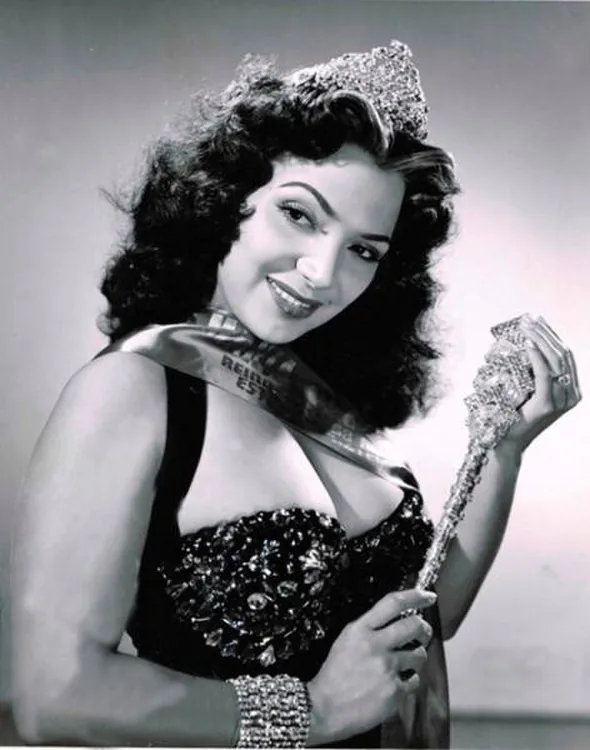
María Victoria Gutiérrez Cervantes, Mexican, is an actress, singer and comedian. With more of a century of life and a long trajectory, was born in a home that was plunged into extreme poverty, which forced her to work from very small. Taking advantage of his vocal talent, in the mid-1940s he introduced himself to the world of show, acting as a singer in tents, theatres and cabarets. He specialized in gender of a bowling and pop, and among its greatest successes are "Beware, Beware," "So," "Like a dog," "Much, much," "How divine," "Well done," "How nice I feel," "I'm happy" and "I'm not yet dying."

María Elena Velasco Fragoso, a Mexican born, stood out as an actress, humorist, singer and dancer. He became widely known for creating and interpreting La India María, a comic character who takes as a reference to the indigenous woman of Mexico.
José Miguel Pérez Saint Martin, a Mexican born, has developed his career as an actor, politician and comedian. He held the post of Rider in the City of Metepec between 2025 and 2027. It is famous for incarnating Ludoviquito P. Luche in the series "La familia P. Luche," which se released in 2002.
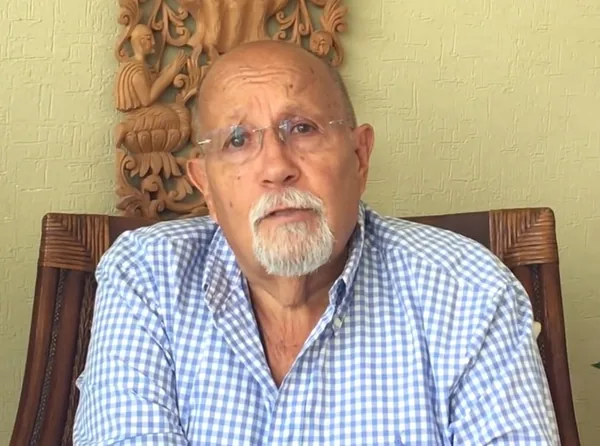
Polo Polo , born Leopoldo Roberto García Peláez Benítez , was a Mexican stand-up comedian known for his distinctive storytelling, wordplay, double entendres, and adult-oriented humor. Born on March 9, 1944, in León, Guanajuato, he initially worked in his family's shoemaking business before discovering his talent for comedy. He began performing in small clubs and bars before gaining wider recognition at Mexico City's Keops Nightclub during the 1970s. Polo Polo became one of the most recognizable figures in Mexican comedy during the 1980s and 1990s. His routines were typically delivered as elaborate first-person anecdotes, often featuring sexual humor, Mexican wordplay known as albur , and colorful everyday situations. His live recordings became highly popular, and he also appeared on television, in films, and in major venues across Mexico and the United States, including the Grand Olympic Auditorium in Los Angeles. Often described as a pioneer of stand-up comedy in Mexico, Polo Polo influenced generations of Spanish-language comedians with his conversational storytelling style and unapologetic adult humor. He retired from the stage in the 2010s after more than four decades in entertainment and died on January 23, 2023, at the age of 78. His work remains an important part of the history of Mexican comedy.

Ramón Valdés was a Mexican actor and comedian, born Ramón Esteban Gómez-Valdés y Castillo on September 2, 1924, in Mexico City. His family relocated to Ciudad Juárez when he was two years old. He came from a large family; he had nine siblings, including brothers Germán Valdés, Manuel ‘El Loco Valdés,’ Antonio ‘El Ratón Valdés,’ and Rafael Gómez-Valdés y Angellini, all of whom also pursued careers in acting and comedy. Early in his life, Valdés experienced economic hardship and worked various jobs. His brother, Germán Valdés, known as ‘Tin Tan,’ assisted him by securing minor roles and extra work. Valdés began his film career in 1949 with a role in Calabacitas tiernas . During the Golden Age of Mexican cinema, he appeared in over 50 films. He collaborated with Roberto Gómez Bolaños, known as Chespirito, beginning in 1968, working on shows such as Los supergenios de la mesa cuadrada , Chespirito , and El Chapulín Colorado . He is best known for portraying Don Ramón in the sitcom El Chavo del Ocho , a role which brought him international fame starting in 1971. Although he left the program in 1979, he briefly returned in 1981, marking his final collaboration with Bolaños. Beyond El Chavo del Ocho , Valdés's career included appearances in Federrico (1982), a Venezuelan sitcom, and ¡Ah qué Kiko! (1987). In 1984, he starred in a musical program called Aprendiz de Pirata , featuring Luis Miguel. He also owned a circus. Valdés was Roman Catholic of Spanish and Italian descent and had three wives and ten children. Critics, such as Emilio García Riera, did not favorably review his performance in the 1952 film Las locuras de Tin Tan . Ramón Valdés died on August 9, 1988, in Mexico City at the age of 63.

Estanislao Schillinsky Bachanska, known professionally as Shilinsky, was a Mexican comedian, actor, and screenwriter. Born on August 10, 1911, in Baisogala, he was of Lithuanian origin but became a Mexican national. He died in Mexico City on September 27, 1985, at the age of 74. Shilinsky’s early life included a move to Mexico with his brother as part of a Russian circus troupe, arriving sometime before 1929. His career began when he joined Carpa Valentina, setting the stage for his future comedic endeavors. Shilinsky's comedy style was closely intertwined with Mexican cinema’s Golden Age, and he actively participated both as an actor and a scriptwriter. He is particularly remembered for his collaboration with Mario Moreno, better known as Cantinflas. In 1929, Shilinsky helped Moreno develop the character that would make him internationally famous, and subsequently appeared in films starring Moreno as a supporting actor. He retained a noticeable Russian accent in his acting, which contributed to his unique persona. From 1937 to 1940, he appeared in films such as 'Don't Fool Yourself Dear,' 'Jengibre vs Dinamita,' and 'Cantinflas boxeador,' the latter of which he also co-wrote. Shilinsky also co-wrote 'Siempre listo en las tinieblas' in 1939. A significant portion of Shilinsky’s career was dedicated to performing with Manuel Palacios ‘Manolin.’ Together, they formed the comedy duo «Manolín y Shilinsky» from 1948 to 1977. The duo starred in their own films alongside Manolín. Shilinsky's personal life was also connected to Cantinflas; he married Olga Subarev, daughter of Grigori Ivanov, making him Cantinflas’ brother-in-law, as Cantinflas himself married Valentina Ivanova, Olga’s sister. Manuel Palacio Sierra, his comedy partner, sadly died in poverty in 1977. Shilinsky had multiple children throughout his life, including Víctor, Sergio, Olga, and Eduardo Shilinsky Ivanova with Olga Ivanova, and María Teresa Shilinsky López with Margarita López Vargas (Pastora Vargas), as well as Marilina with Aideé Gracia.
 Albania
1
 Armenia
1
 Argentina
24
 Austria
28
 Australia
22
 Azerbaijan
1
 Belgium
13
 Bulgaria
31
 Benin
2
 Bolivia
1
 Brazil
12
 Canada
48
 Switzerland
17
 Chile
8
 Cameroon
1
 China
7
 Colombia
2
 Czech Republic
7
 Germany
188
 Denmark
17
 Dominican Republic
1
 Algeria
2
 Estonia
5
 Egypt
4
 Spain
74
 Finland
15
 France
214
 United Kingdom
227
 Ghana
3
 Greece
18
 Guatemala
1
 Hungary
7
 Indonesia
8
 Ireland
28
 Israel
9
 India
11
 Iraq
3
 Iran
6
 Italy
136
 Jamaica
1
 Japan
35
 Kenya
3
 Korea, South
20
 Kazakhstan
1
 Lebanon
5
 Lithuania
1
 Latvia
1
 Morocco
17
 Myanmar
1
 Malta
1
 Malawi
2
 Mexico
28
 Malaysia
7
 Nigeria
19
 Nicaragua
2
 Netherlands
2
 Norway
12
 Nepal
3
 New Zealand
9
 Peru
2
 Philippines
35
 Pakistan
7
 Poland
8
 Portugal
7
 Qatar
1
 Romania
1
 Serbia
3
 Russia
9
 Saudi Arabia
4
 Sweden
101
 Slovenia
4
 Slovakia
2
 Thailand
2
 Tunisia
4
 Turkey
5
 Taiwan
1
 Ukraine
7
 Uganda
7
 United States
213
 Uruguay
1
 Uzbekistan
1
 Vietnam
1
 South Africa
2