GiggleTime GiggleTime
Menu
Go Premium Submit a Joke Comedians About FAQs Contact

Legal
Privacy Policy Terms of Service Cookie Policy Refund and Cancellation Policy Attributions
Login
Language
Categories
Settings
Language English
Safe Mode
Random Jokes Autoplay
Notifications
Global Talent Directory

Comedians Directory

Browse comedian profiles, biographical summaries, country of origin, and official links.

Add a comedian
1801 comedians
Fernandel, comedian from France
Verified Unclaimed
France

Fernandel

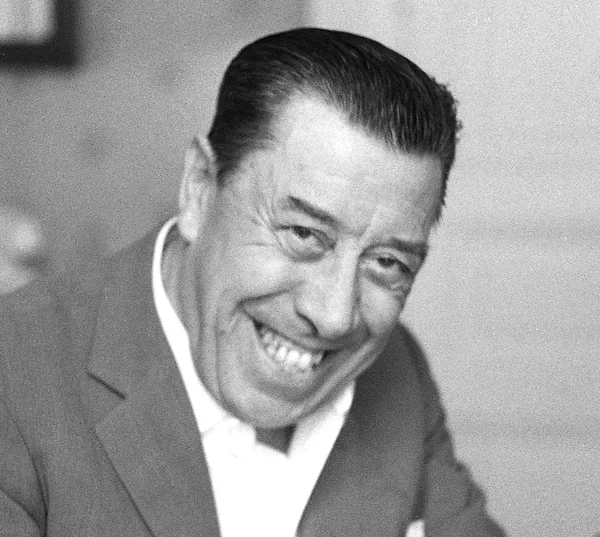
Fernand Joseph Désiré Contandin, known professionally as Fernandel, was born on May 8, 1903, in Marseille, France. His parents were Désirée Bédouin and Denis Contandin, who originated from Perosa Argentina, Italy; his father worked as a bookkeeper and performed as an amateur comedian under the pseudonym 'Sined'. He had two brothers, Auguste-Marcel (1897-1961) and Francis (Fransined) (1914-2012), and a sister, Marguerite (1910-2006). Having started in music halls, Fernandel adopted the stage name Fernandel in 1922, a designation provided by his mother-in-law. He married Henriette Félicie Manse in 1925. Fernandel’s career began with appearances in cafes and at weddings, followed by a victory at a children's singing competition at the Théâtre du Châtelet in Marseille at age seven. He made his film debut in 1930 in Le Blanc et le Noir . His popularity grew steadily throughout the 1930s and 1940s, with key roles in films like Angèle (1934), Regain (1937), Le Schpountz (1938), and La Fille du Puisatier (1940). He collaborated extensively with Marcel Pagnol, appearing in thirteen of his films. He released the popular song “Félicie aussi” in 1939 and had a successful recording of “La Caissière du Grand Café” in 1947. Fernandel became one of the biggest stars of French cinema for several decades, appearing in over 125 films between 1930 and 1969. He was well-known for portraying the Italian village priest in the Don Camillo series from 1951 to 1970, a role which led to a meeting with Pope Pius XII in 1953. His distinctive facial features, which he referred to as his ‘gueule de cheval’ (horse-like face), became a trademark. He also appeared in Italian and American films, including Around the World in 80 Days (1956) with David Niven and Paris Holiday (1958) with Bob Hope and Anita Ekberg. Fernandel was involved in the direction or joint production of multiple films throughout his career. Fernandel’s films attracted over 200 million spectators during his career, and in 1968, General Charles de Gaulle stated that Fernandel was the only Frenchman more famous than himself worldwide. Following a diagnosis of lung cancer, he passed away on February 26, 1971, and his remains are interred at the Cimetière de Passy in Paris. His son Franck Fernandel became an actor and singer, and acted alongside his father in L'Âge ingrat and En avant la musique .

François Cavanna, comedian from France
Verified Unclaimed
France

François Cavanna

François Cavanna, born on February 22, 1923, in Paris’s 14th arrondissement, was a French author and satirical newspaper editor. He died on January 29, 2014, in Créteil. His upbringing in Nogent-sur-Marne was shaped by his Italian immigrant father, Luigi Cavanna, who worked as a mason, and his mother, Marguerite Charvin. Surrounded by Italian immigrants from a young age, he documented these experiences in his autobiographical work Les Ritals , published in 1978. He obtained his primary school certificate at age 12 and earned a brevet in 1939. Cavanna’s early life included diverse employment; at age 16, he worked as a postal letter deliverer, fruit/vegetable seller, and mason's apprentice. His journalistic career began in 1945 with Libération. He was ordered to relocate to Bordeaux in 1940 due to World War II, and from 1943-1945 he was forced into labor (STO) in Berlin. During this time, he formed a relationship with Maria Tatarchenko, a Ukrainian worker, whom he dedicated Les Russkoffs to in 1979. He co-founded several satirical magazines, including Hara-Kiri , Hara-Kiri Hebdo , Charlie , and Charlie Hebdo , contributing significantly to their creation and success. He wrote in various genres, including reportage, satire, essays, novels, autobiography, and humor. Cavanna’s comedic style was characterized by a blend of jokes, absurdity, coq-à-l’âne (rapid-fire association), satire, and mockery. His work often bordered on surrealism and frequently mocked the presentation of science and scientists. He translated six books about famous cartoonists, including Li'l Abner in 1971 and L'Univers impitoyable de Gary Larson in 1988. He conceived the idea to rename Hara-Kiri to Charlie Hebdo in November 1969 after its ban. He appeared on the French literary talk show Apostrophes in 1978, where he famously told Bukowski to "shut up." Les Ritals , initially published in chapters in Hara-Kiri starting in 1976, was adapted into a play that explores themes of immigration and resonates with many families. He received the Prix Interallié in 1979 for Les Russkoffs . His final book, Lune de miel , addressed his Parkinson's disease.

Henri Salvador, comedian from France
Verified Unclaimed
France

Henri Salvador

Henri Salvador, born Henri Gabriel Salvador on July 18, 1917, in Cayenne, French Guiana, was a multifaceted French entertainer. His parents, Clovis and Antonine Paterne, hailed from Guadeloupe, and he had a brother named André and a sister named Alice. The family relocated to Paris when he was twelve. He began his career in the 1930s as a guitarist accompanying other singers, learning by imitating Django Reinhardt's recordings. Salvador subsequently worked with Reinhardt in the 1940s, demonstrating early musical versatility. Salvador’s career encompassed singing, dancing, and comedy, initially with Ray Ventura and His Collegians. He transitioned to a singing career around 1948, appearing in films such as Nous irons à Paris (1949), Nous irons à Monte-Carlo (1950), and Mademoiselle s'amuse (1948). He recorded songs written by Boris Vian, arranged by Quincy Jones, and even explored French rock and roll in 1957 under the name Henry Cording. Throughout the 1950s to 1970s, he wrote, produced, and performed humorous and popular songs, known for his crooner style and smooth voice, and he mastered many musical instruments. Salvador hosted several popular television variety shows in the 1960s and achieved a hit with “Zorro est arrivé” in 1964. He is also recognized for his distinctive laugh, frequently incorporated into his music. His song “Dans mon île” (1957) significantly influenced Antônio Carlos Jobim’s formulation of bossa nova. He voiced Sebastian the crab in the French dubbing of The Little Mermaid in 1989. He received numerous accolades during his seven-decade career, including the Brazilian Order of Cultural Merit in 2005 and was made a commander of the French Légion d'honneur and the French National Order of Merit. He died on February 13, 2008, in Paris due to a ruptured aneurysm and was buried in Père-Lachaise Cemetery.

Jacques Weber, comedian from France
Verified Unclaimed
France

Jacques Weber

Jacques Henri Robert Weber, known professionally as Jacques Weber, was born on August 23, 1949, in the 10th arrondissement of Paris. He comes from a bourgeois family with Swiss origins; his father, Robert Weber, was a physicist, chemist, and laboratory director, while his mother, Madeleine Weber, enjoyed opera and literature. Weber attended Lycée Carnot and later studied dramatic art at the École de la rue Blanche. His career spans over fifty years, establishing him as a prominent figure in French entertainment. Weber's early training included attending the Conservatoire national supérieur d'art dramatique, where he joined at age 20 and won the Prix d'Excellence upon leaving. He benefited from mentorship with Pierre Brasseur for a year and a half and met Francis Huster at the Conservatoire du 18e arrondissement, with whom he later competed in a contest. He also worked with Robert Hossein in Rheims and joined the Théâtre populaire de Reims under Hossein's direction. In 1970, Marcel Cravenne engaged him for a production of Tartuffe . He subsequently appeared in productions such as Faustine et le Bel Été (1972) and État de siège (1972), and later in Le Malin Plaisir (1975) and Une femme fatale (1976). He has also appeared in the film Le Comte de Monte-Cristo . Weber’s career includes significant stage work, notably playing Cyrano de Bergerac for several seasons, performing it approximately 500 times. In 1990, he took on the role of Comte de Guiche; later, in 1998, he played Don Juan. He served as director of the Centre dramatique national in Lyon during the period from 1979 to 1985. Subsequently, between 1986 and 2001, he directed the Théâtre de Nice, Centre dramatique national Nice-Côte d'Azur. In 2008, he directed a televised adaptation of Figaro for France 3. He has also appeared as Judge Antoine Rives in a television show and played Charles V at the Ommegang of Brussels in 2013. Currently, he is performing Cyrano, rêver, rire, passer , written by his wife Christine Weber, with Ludmilla Mikael; this play premiered at the Théâtre de la Pépinière in Paris on January 29th.

Jean Dujardin, comedian from France
Verified Unclaimed
France

Jean Dujardin

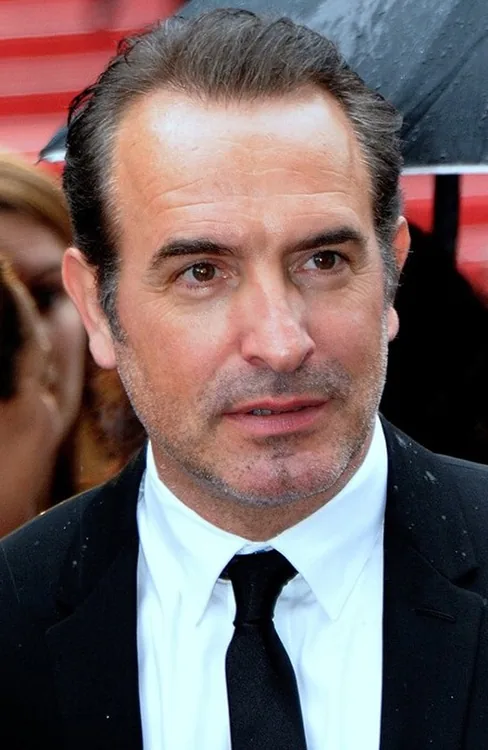
Jean Dujardin, who performs under the name Jean Edmond Dujardin, is a French entertainer working as an actor, comedian, producer, and director. June 19, 1972, marks the date of his birth in Rueil-Malmaison, France, which is close to Paris. Growing up in Plaisir, Yvelines, he briefly worked as a locksmith for his father’s construction company before embarking on a career in performance. Currently 54 years old, Dujardin began performing stand-up routines in cafes and served in the military where he entertained fellow conscripts with impressions, discovering his comedic talent. Dujardin's career began on stage and television in the 1990s with the comedy troupe Nous Ç Nous. In 1996, Dujardin participated on the television program Graines de star alongside other contestants. From 1999 to 2003, he gained significant popularity through the television series Un gars, une fille alongside Alexandra Lamy, who was later his wife from 2009 to 2014. He starred in comedic television programs and films early in his career, and created the character of Brice de Nice on the show Fiesta , which was adapted into a film, Brice de Nice , in 2005. Dujardin achieved international fame through various roles, including Hubert Bonisseur de La Bath in the OSS 117 films: Cairo, Nest of Spies (2006), Lost in Rio (2009), and From Africa with Love (2021). He also starred as Lucky Luke in the film Lucky Luke (2009) and collaborated with Michel Hazanavicius on The Artist (2011), where he played George Valentin. This role earned him numerous accolades, including the Academy Award for Best Actor (2012), a Golden Globe, a BAFTA, and a Screen Actors Guild Award. He has also appeared in American films like The Wolf of Wall Street (2013) and The Monuments Men (2014). Recent roles include appearances in Présidents (2021) and Brice 3 (2016), and he is slated to play Don Diego de la Vega in the mini-series Zorro in 2024.

Marcel Marceau, comedian from France
Verified Unclaimed
France

Marcel Marceau

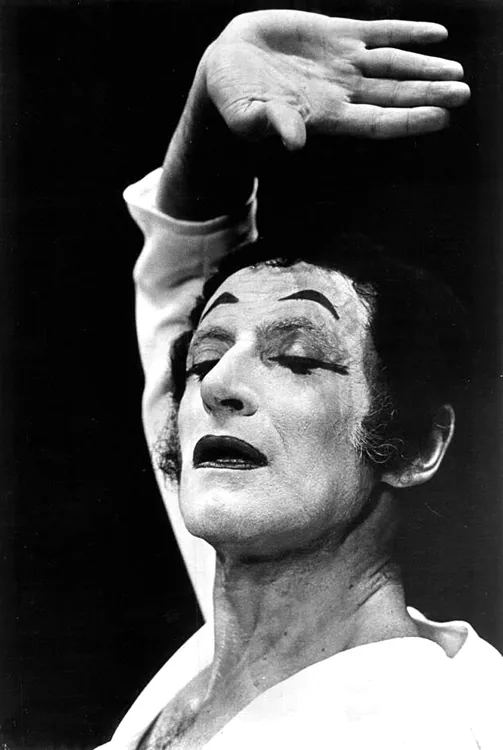
Born Marcel Mangel in Strasbourg, France, on March 22, 1923, Marcel Marceau became a globally recognized French actor and mime. His birth name reflected his parents, Charles Mangel, a butcher, and Anna Werzberg. The family relocated to Lille in 1926 for professional reasons and later moved to England. Early on, Marcel was influenced by Charlie Chaplin’s films, inspiring his dream of becoming a mime, and he attended the Fustel-de-Coulanges lycée in Strasbourg until 1938. During World War II, Marceau’s family evacuated and initially settled in Chancelade and Périgueux. At age 17, he fled with his family to Limoges and studied at the Gay-Lussac lycée and the École des arts décoratifs de Limoges in 1941. He actively participated in the French Jewish Resistance, helping rescue Jewish children, including around thirty who escaped to Switzerland with his cousin Georges Loinger. He adopted the surname 'Marceau' during the German occupation, referencing François Séverin Marceau-Desgraviers. Because of his proficiency in English, French, and German, he served as a liaison officer for General George Patton’s Third Army during the war. Tragically, his father was arrested and deported to Auschwitz in 1944, where he was murdered. Following the conflict, Marceau began studying at Charles Dullin's School of Dramatic Art in 1945, receiving instruction from Joshua Smith, Étienne Decroux and Jean-Louis Barrault. In August 1944, he presented his initial significant performance for an audience of 3,000 soldiers in Paris. In 1947, he created the character 'Bip the Clown,' debuting him on March 22 at the Théâtre de Poche Montparnasse, inspired by Pip from Charles Dickens’ Great Expectations . He received the Deburau Prize in 1949 for his mimodrama, Death before Dawn , and founded Compagnie de Mime Marcel Marceau that same year. For more than 60 years, Marceau entertained audiences globally as a professional performer, featuring in films such as 'Barbarella' (1968) and 'Silent Movie' (1976), where his only spoken word was “Non.” He devoted sixty years to elevating pantomime to a prominent art form, completing over 5,000 performances. Marcel Marceau passed away on September 22, 2007, at the age of 84 and was laid to rest at Pere Lachaise cemetery in Paris.

Max Linder, comedian from France
Verified Unclaimed
France

Max Linder

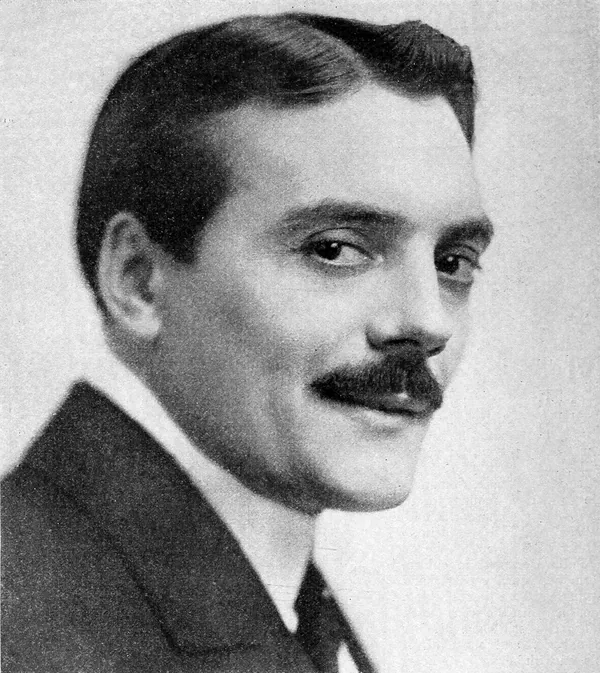
Max Linder, born Gabriel-Maximilien Leuvielle on December 16, 1883, in Saint-Loubès, Gironde, France, was a significant figure in early cinema. His parents, Jean (Marcel) Leuvielle and Suzanne Baron, were vineyard owners, providing him with a comfortable upbringing that included studies at the lycée of Talence. He initially pursued a theatrical career, enrolling in the Conservatoire de Bordeaux in 1899 and winning awards for both comedy and tragedy. However, he was expelled after an altercation with a professor, and briefly performed under the pseudonym Max Lacerda before adopting the name Max Linder in 1904, inspired by a Bordeaux shoe store sign. Linder’s career took a pivotal turn when he began working for Pathé in the summer of 1905. He served as a screenwriter, director, and actor, producing an impressive rate of approximately one film per day. His early work included 'Le Premier cigare d'un collégien' (1905). Beginning in 1907 with 'The Skater's Debut,' he achieved recognition for his depiction of 'Max,' a character representing a prosperous socialite. His portrayal of 'Max,' featured in approximately 100 short films from 1910 to 1914, is recognized as one of the earliest examples of a consistently appearing character in cinema. Linder's creative partnership with René LePrince led to co-direction of his own films starting in 1911. He toured internationally between 1912 and 1913, visiting Spain, Germany, and Russia (Saint Petersburg). During a skating performance in 1911, he suffered an eventration injury. With the outbreak of World War I, Linder enlisted in the French army and was injured multiple times during his service. Following the war, he attempted to find success in the United States, but this effort proved unsuccessful. His younger brother, Maurice, achieved fame as a national rugby player, while his sister Marcelle appeared in some of his films. Max Linder died on November 1, 1925, in Paris, leaving behind a legacy that significantly influenced the creation of Charlie Chaplin’s ‘The Tramp’ character.

Michel Galabru, comedian from France
Verified Unclaimed
France

Michel Galabru

Born in Safi, Morocco, on October 27, 1922, Michel Galabru was a French actor and writer. His father, Paul Galabru, was an engineer and professor. Initially aspiring to be a professional football player for Stade olympique montpelliérain, he briefly studied law at his father’s request. He spent his early childhood in Safi and later years in Hérault before moving to Paris. Galabru's career spanned nearly seventy years, encompassing over 250 films and more than 80 plays. Galabru began his acting journey in 1951 with a minor role in Ma femme, ma vache et moi . He received initial recognition for his performance in La guerre des boutons (1963) and gained widespread popularity with Le Gendarme de Saint-Tropez (1964), portraying Adjudant Gerber. He frequently appeared alongside Louis de Funès in several films, including sequels to Le Gendarme de Saint-Tropez and L'Avare . His comedic collaborations extended to films directed by Jean Girault, Jean-Pierre Mocky, Georges Lautner, Bertrand Blier, and Claude Zidi. He was a pensionnaire (member) of the Comédie-Française from 1950 to 1957 and won first prize from the Conservatoire national d'art dramatique. Galabru’s filmography included both comedies and dramas, with notable roles in L'avare , Jo , Nous irons a Deauville , La Cage aux Folles , La Cage aux Folles II , La Cage aux Folles 3: The Wedding , Le viager , Subway , Kamikaze , and Uranus . Bertrand Blier, Costa-Gavras, and Jean-Luc Godard were among the directors with whom he worked. He won a César Award for Best Actor in 1977 for his role as Joseph Bouvier in Bertrand Tavernier’s The Judge and the Assassin , and received nominations for the César Award for Best Actor in a Supporting Role in 1986 ( Subway ) and 1991 ( Uranus ). He directed the Théâtre Montmartre-Galabru and the Théâtre de Dix Heures. His final performance was in the one-man show Le Cancre . Michel Galabru died on January 4, 2016, in Paris at the age of 93.

Omar Sy, comedian from France
Verified Unclaimed
France

Omar Sy

Omar Sy is a French actor, film producer, screenwriter, and humorist born on January 20, 1978, in Trappes, Yvelines, France. He is of Fulani origin, with parents who immigrated from West Africa; his mother originates from Mauritania and his father from Senegal, both hailing from the village of Bakel. Born and raised in the Les Merisiers area of Trappes, he was one of nine children. In 1996, Sy launched his professional life at Radio Nova, an experience that included a meeting with Fred Testot. His radio broadcasting experience resulted in comedic segments on 'Service après-vente des émissions' between 2005 and 2012, as well as the television program 'Omar et Fred' which premiered on Canal+ in 2001 and continues today. He also made appearances on Canal+'s 'Le Cinéma de Jamel', and formed a comedic partnership with Fred Testot known as Omar and Fred. Sy gained recognition for his physical comedy and appeared in films like Montparnasse Tower Inferno (2001), The Raid , The Beuze , and Our Happy Days . He also participated in an album against racism called Stop à l’affront in 2003. He achieved widespread recognition after starring in the 2011 French box-office hit The Intouchables , earning him the César Award for Best Actor in 2012 and a Globe de Cristal for Best Actor. He became the first Black actor to receive the César Award. Following this success, Sy appeared in several American blockbuster films including X-Men: Days of Future Past (2014), Jurassic World (2015), Transformers: The Last Knight (2017), and Arctic Dogs (2019). He has also voiced characters in video games like 'Tomb Raider Legend' and 'Logorama'. Since 2021, he stars in the Netflix series Lupin . In 2021, he was named one of Time’s 100 most influential people in the world. Sy has secured a long-term agreement for feature films with Netflix, alongside an initial collaboration arrangement with HBO Max. He currently lives in Hidden Hills near Los Angeles, USA.

Pierre Dac, comedian from France
Verified Unclaimed
France

Pierre Dac

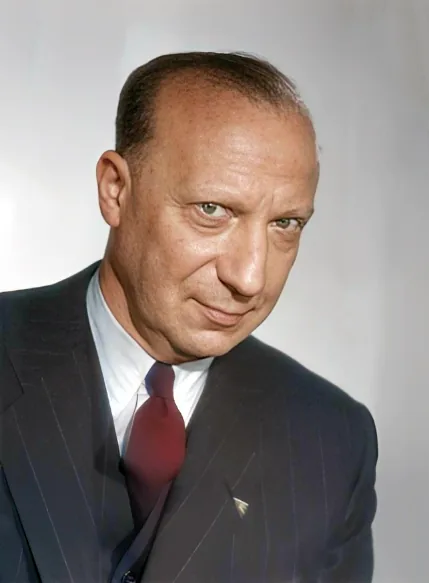
Pierre Dac, born André Isaac on August 15, 1893, in Châlons-sur-Marne, France, was a French humorist. His family, originally from Alsace (Uttenheim and Niederbronn-les-Bains), had Jewish roots and emigrated after the Franco-Prussian War. His father, Salomon Isaac, was a butcher, and the family moved to Paris when Dac was three years old. He attended violin lessons as a child but was expelled from school in 1908 for a prank. Dac's career began in the 1920s as a chansonnier at cabarets like La Muse rouge and La Vache enragée. He created the satirical journal L'Os à moelle in 1938, which gained popularity before being halted by Nazi censorship. He appeared in films such as Voilà Montmartre (1934) and Juanita (1935). In 1941, escaping the conflict of World War II, he sought refuge in London. There, he contributed to Radio Londres, a BBC service reaching occupied France, by composing humorous songs and performing comedic routines. He was arrested in Spain while attempting to reach London and spent several months in Franco's jails. After World War II, Dac formed a comic duet with Francis Blanche, and they created and hosted popular radio series like Malheur aux barbus , Signé Furax , and Bons Baisers de partout . Dac coined the comic term 'Schmilblick,' described as 'rigorously integral, which serves absolutely nothing and can therefore serve everything,’ and popularized the word “loufoque.” He also invented the biglotron and the recipe for noodle jam. He was initiated into freemasonry in 1926 and created a parodic masonic rite called 'Le rite des Voyous'. Pierre Dac was recognized with several distinctions throughout his life; these included the Croix de Guerre (both 1914-1918 and 1939-1945), the Resistance Medal, and the distinction of being appointed a Knight of the Order of the Legion of Honour. Until his passing on February 9, 1975, in Paris, he remained active in film and television, with roles in productions like La Famille Anodin (1956) and Ne jouez pas avec les Martiens (1968).